
BADLAND
HypeHype Inc.Adventure
4.131.26K Reviews
- Version
- 3.2.1.6
- Installs
- 50.00M
- Age Rating
- Everyone
Screenshots
Our Review of BADLAND
 Analysis by Appyee
BADLAND is the kind of adventure game that makes a strong first impression without needing a long tutorial or a complicated story setup. I guide a small flying creature through a dark, woodland-like world filled with obstacles, traps, strange objects, and sudden changes in pace. The controls are simple, but surviving each section demands attention, timing, and a willingness to learn from mistakes.
After spending time with it, I found that its real question is not whether it is enjoyable at first. It clearly is. The more useful question is whether it deserves a permanent place on your phone once the novelty has faded. My answer is mostly yes, although the reason depends on what I want from a mobile game. BADLAND is excellent for short, focused sessions and for players who enjoy mastering movement. It is less suitable for anyone looking for a relaxed adventure, a large narrative campaign, or a game that constantly introduces completely new ideas.
Why the first week feels so compelling
The opening experience is unusually effective because the game teaches through movement rather than lengthy explanations. I quickly understand that holding the screen makes the character rise and releasing it lets the character fall. That sounds basic, but the environment turns this single action into a surprisingly expressive tool. Small changes in pressure and timing can mean the difference between slipping through an opening and colliding with a hazard.
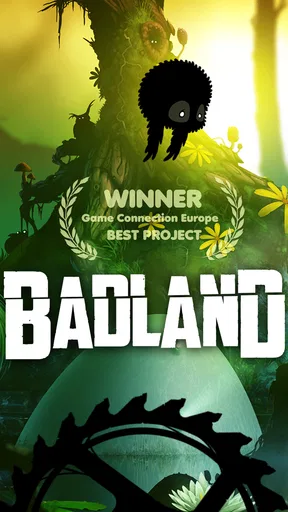
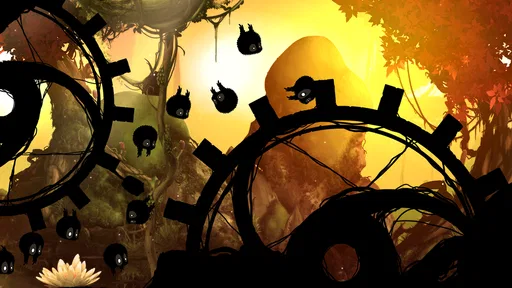
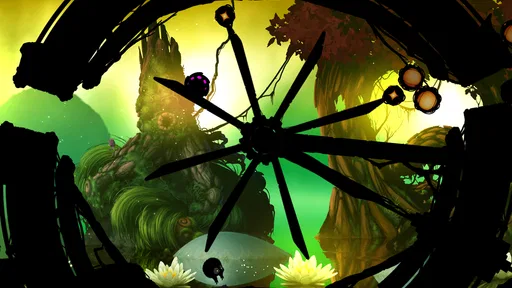
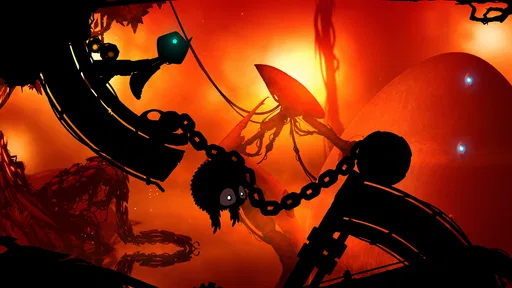
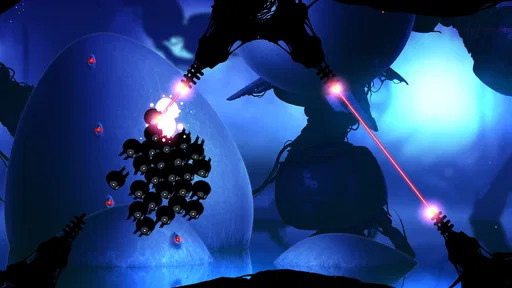
The visual style does a lot of work. Silhouettes, glowing shapes, and layered backgrounds create a moody atmosphere that feels distinctive on a phone screen. The world is easy to read while still looking mysterious, which is important in a game where I need to notice threats quickly. The presentation gives each attempt a sense of place instead of making every challenge feel like an abstract obstacle course.
During the first few sessions, I enjoyed the contrast between calm movement and sudden danger. A section may begin with enough room to settle into a rhythm, then narrow into a passage where I have to react immediately. That rhythm keeps the game from feeling like a simple tap-to-fly exercise. The controls are accessible, but the level design asks for precision.
The game’s adventure identity comes from that forward journey. I am not simply chasing a score on an endless track; I am progressing through designed environments with their own visual mood and mechanical surprises. That makes failure feel more meaningful. When I lose, I usually know that I mistimed a movement, reacted too early, or failed to understand the space ahead.
One of the most useful habits I developed was learning to watch the environment before committing to a movement. New players often focus only on the character, but the safest route is frequently visible a moment earlier in the background or around the edges of the screen. I found that looking ahead, rather than staring at the creature itself, improved my consistency more than tapping faster ever did.
Another practical tip is to treat the first attempt at a difficult section as reconnaissance. Trying to survive at all costs can make the game feel frustrating, while accepting that an attempt may be for learning makes the retry loop more manageable. I started remembering the sequence of openings, moving hazards, and timing changes, which turned repeated failure into gradual progress.
The free entry point also helps the first week. BADLAND is free to play, with optional in-app purchases ranging from $0.99 to $3.99 per item. That makes it easy to test the controls and atmosphere before deciding whether it belongs in my regular rotation. I appreciate that the initial decision is about enjoyment rather than committing to a purchase immediately.
It is also a game that works well in ordinary gaps in the day. If I have a few minutes before leaving home, I can play a short stretch without needing to remember a complicated inventory or a long conversation. If I have more time, I can settle into a longer run and focus on improving. That flexibility is one of the reasons the first-week appeal feels practical rather than purely visual.
What makes the controls better than they look
The one-touch design is not just a convenience for mobile play; it gives the game its character. With only vertical control, every obstacle becomes a question of momentum and timing. I cannot solve a problem by switching weapons, changing equipment, or selecting a different ability from a menu. Instead, I have to understand the movement itself.
This creates a useful distinction between accessibility and ease. Almost anyone can understand how to begin, but that does not mean every stage is easy. The gap between those two ideas is where much of the satisfaction comes from. A player who wants a game that can be learned quickly but practiced for a long time will find a good match here.
The control scheme is also well suited to playing on a phone with one hand. I can keep my attention on the screen without covering a large set of buttons. That said, one-handed play is not automatically comfortable in every situation. On a crowded bus or while walking, the concentration required makes BADLAND a poor choice. It rewards a stable grip and a clear view more than casual background play.
Sound and visual timing work together to make movement feel more deliberate. I often sensed that a section was becoming dangerous before I fully understood why, then noticed how the scenery and action had prepared me for the change. That relationship between atmosphere and control is more memorable than a plain arcade presentation would have been.
Whether it still works after the novelty fades
The first month is where BADLAND has to prove itself. A striking art style can carry a game for several sessions, but it cannot create lasting value by itself. In my experience, the game survives that test because its challenge is based on repeatable skill rather than a single dramatic reveal. I can return after a break and still have a reason to play: improving a difficult section, replaying a familiar route, or simply enjoying the atmosphere.
Its strongest recurring use case is focused downtime. I would recommend it for someone who wants a game to play during a coffee break, while waiting for an appointment, or at the end of the evening when a large role-playing game feels like too much work. The game starts quickly and does not require me to rebuild a mental model of a complicated world every time I open it.
At the same time, it is not a perfect replacement for every other adventure game. If I want character development, dialogue, exploration with many optional paths, or a story that keeps unfolding between sessions, I would choose a different style of game. BADLAND’s appeal is more physical and immediate. Its world invites me to move through it, not to study a large cast of characters or manage a long-term collection.
The game’s long-term value comes from mastery, and that is both its strength and its boundary. Players who enjoy retrying a section until their timing becomes reliable can keep finding satisfaction. Players who need a constant stream of fresh mechanics may eventually feel that the central movement idea is being asked to carry too much of the experience.
I also found that progress feels best when I set a small goal. Rather than deciding that I must complete a large portion of the game in one sitting, I might aim to pass one troublesome sequence without panic. This makes the game’s difficulty feel constructive. It becomes a short training session rather than a test of patience.
For families, the Everyone age rating makes the game approachable from a content perspective, but younger players may still need help with the more demanding timing. The controls are simple enough to explain, yet the later challenge can be more demanding than the dark, quiet presentation initially suggests. I would describe it as accessible to begin, not automatically easy to finish.
BADLAND also benefits from being a familiar kind of game without feeling like a disposable copy. The side-scrolling movement and obstacle avoidance are easy to recognize, but the atmosphere and the way the environment changes give it a stronger identity than a basic reflex game. Compared with endless runners, it feels more deliberate because the spaces are designed rather than purely repetitive. Compared with physics puzzlers, it offers less experimentation and more emphasis on controlled motion.
That comparison helps explain who should skip it. If I want a calm puzzle game where I can stop and think without pressure, this is not my first choice. If I prefer competitive multiplayer or a persistent social system, it also will not fill that role. BADLAND is for the player who likes a solitary, tactile challenge and does not mind repeating a section to improve.
Small habits that improve repeat play
I recommend playing with the screen brightness and sound at a comfortable level rather than treating the game as something to run silently in the background. The visual contrast is part of the experience, and the audio helps me stay attentive to the rhythm of a section. When I played while distracted or with the phone held awkwardly, mistakes felt less like genuine difficulty and more like poor conditions.
Another useful approach is to avoid making every retry emotionally important. The game can tempt me into rushing immediately after a failure, especially when I know I was close. That usually produces another careless mistake. Waiting a moment, identifying the exact point of failure, and then trying again gives the control scheme room to work.
I also prefer returning to a difficult area after a short break instead of grinding through frustration. Because the game depends on timing, tiredness can make a familiar sequence feel unfair. A brief pause often helps me recognize the correct rhythm more clearly than ten hurried attempts in a row.
These habits matter because BADLAND does not hide its core loop. There is no elaborate maintenance system to manage, no large set of daily chores, and no need to spend time organizing a virtual collection before playing. The maintenance burden is low in the practical sense: I open it, play, and stop. The personal maintenance is different. To keep enjoying it, I need to manage my own frustration and accept that improvement may be gradual.
Where fatigue begins
The same qualities that make the game focused can eventually make it feel narrow. The central action remains satisfying, but it does not offer the broad variety found in a larger adventure. After I have learned how the movement behaves, the surprise comes mainly from the environment and the timing, not from a growing set of radically different ways to play.
That can create fatigue for players who prefer novelty over refinement. I sometimes reached a point where I understood what the game wanted from me but did not feel eager to repeat the process. This was not a problem with the controls themselves; it was a reminder that mastery-based games ask me to enjoy polishing a skill.
The dark presentation may also divide opinions. I like its atmosphere, but it can make the action feel visually intense when the screen is small or the surrounding light is poor. Players who prefer bright, cheerful worlds may find the mood heavy over longer sessions. The style is a genuine strength, yet it is not neutral.
Difficulty is another possible source of friction. The game is easy to start, but a player expecting a consistently gentle experience may be surprised by how much concentration later sections demand. I would not recommend it to someone who wants a game that can be played with almost no attention while watching television. It is forgiving enough to learn, but it still expects active participation.
The free model deserves a realistic look as well. Optional purchases can be useful for players who want to spend a little on the experience, but the presence of purchasable items means the game is not identical to a completely self-contained premium title. Anyone who strongly prefers paying once and seeing no purchase prompts should consider that difference before settling in.
Device compatibility is relatively broad for a modern mobile game, since the current version runs on Android 6.0 or later. That makes it available to people using older supported phones, although the actual comfort of play still depends on screen responsiveness and performance. A technically compatible device is not always the best device for precise timing, so I would judge the experience by how reliably the controls respond in practice.
The game has also accumulated a large audience: more than 50 million installs, with an average rating of 4.1 from around 1.6 million ratings and roughly 31 thousand written reviews. Those figures suggest durable reach, but they should not replace personal testing. A popular game can still be the wrong fit if I dislike retry-based challenges or atmospheric presentation.
Who will keep returning, and who will not
I think BADLAND is a strong choice for players who enjoy compact sessions with a clear skill curve. It suits someone who wants to improve reaction timing, learn environmental patterns, and feel a direct connection between a small input and a visible result. It is also a good option for a player who values mood and visual identity as much as a conventional story.
I would be more cautious recommending it to someone who needs a strong reason to return every day. There is no need to turn it into a daily habit, and forcing that habit may expose its repetition sooner. The game works better as a title I revisit when I want concentrated play than as an obligation that demands a routine.
For a child or a new mobile player, I would begin by showing how the movement works and then let them discover the timing. The first challenge is understandable, but repeated failure can be discouraging if the player expects immediate success. A short session with encouragement is more likely to create a good impression than handing over the phone and expecting uninterrupted progress.
For an experienced arcade player, the attraction is the controlled simplicity. There are no layers of equipment or character statistics to obscure performance. When I succeed, I know the improvement came from reading the space and handling the movement better. That clarity is satisfying, but it also means there are fewer alternative strategies when a particular section does not match my instincts.
Compared with a typical endless runner, I prefer BADLAND when I want designed challenges and a stronger sense of progression. Compared with a story-heavy adventure, I prefer it when I want to play immediately and think through movement rather than dialogue. Compared with a quiet puzzle title, I prefer it when I want tension and reflexes. Those are meaningful distinctions, not minor variations, and they should guide the download decision.
My long-term verdict
BADLAND earns lasting space on my phone because its core interaction remains satisfying after the first visual surprise has passed. The game is free, carries an Everyone content rating, and comes from HypeHype Inc. Its current version is 3.2.1.6, and the broad device support makes it an easy title to try for many Android users.
What keeps me returning is not a promise of endless novelty. It is the dependable pleasure of handling movement well. A short session can give me a clear objective, a mistake can teach me something specific, and a successful retry feels earned. That is a strong foundation for a mobile adventure game.
Still, I would not call it universally essential. If I want a rich story, relaxed exploration, multiplayer interaction, or a game that constantly changes its rules, I would look elsewhere. Its optional purchases may also matter to players who prefer a straightforward premium model. The dark tone and retry-focused challenge can become tiring when I am already mentally worn out.
My recommendation is to treat it as a focused skill game rather than as an all-purpose adventure. Play it when you can give the screen your attention, use the early attempts to study patterns, and take breaks before frustration replaces curiosity. That approach makes the difficulty feel fairer and preserves the atmosphere that first drew me in.
In the end, BADLAND is worth keeping for the player who enjoys precision, mood, and compact adventures that reward patience. It does not need a complicated maintenance routine to remain useful; its recurring value comes from how naturally it fits into short periods of concentrated play. For me, that is enough to keep it installed—not because every return is surprising, but because the movement still feels good when I want a focused challenge.
Verdict
Strengths of BADLAND
- Atmospheric visuals and audio create a memorable cinematic experience.
- Physics-based movement feels responsive and satisfying to master.
- Local multiplayer supports cooperative and competitive play.
- Many levels offer varied hazards, puzzles, and environmental challenges.
- Offline play makes it convenient for travel or limited connections.
Limitations of BADLAND
- Some later levels can feel frustrating without careful trial and error.
- The dark art style may make certain hazards difficult to spot.
- Multiplayer requires compatible controllers for the best experience.
- The campaign can become repetitive if played in long sessions.
- Touch controls may feel less precise during fast-paced sections.
Similar Picks in This Category
View All
Roblox
Roblox Corporation4.2

Pokémon GO
Niantic, Inc.3.5

Ninja warrior: legend of adven
TOH Games4.6

Ninja Arashi
Black Panther4.6

Eyes - The Horror Game
Fearless Games sp. j.4.5

Critical Action:Gun Strike Ops
FPS Shooter & Action Game4.3
Frequently Asked Questions
What is BADLAND, and what kind of game is it?
BADLAND is a physics-based side-scrolling adventure game set in a mysterious forest filled with traps, machines, and unusual creatures. You control a small flying creature and guide it through atmospheric levels by tapping the screen to flap. The game combines platforming, exploration, and puzzle-solving, with a strong focus on timing, movement, and discovering a safe route through each environment.
Is BADLAND suitable for beginners and casual players?
Yes. BADLAND is easy to understand because its main control is simple: tap to make your creature fly upward and release to let it fall. However, the levels gradually become more challenging, requiring careful timing and quick reactions. Beginners can enjoy the early stages immediately, while experienced players will find tougher obstacles, collectibles, and more demanding sections later in the game.
Does BADLAND support multiplayer or local co-op?
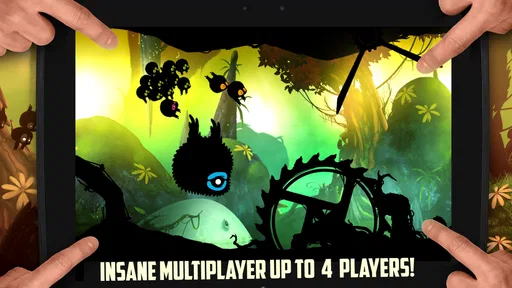
BADLAND includes a local multiplayer mode that allows several players to compete or cooperate on the same device, depending on the selected mode and level. This can be especially enjoyable on a tablet or a phone with a larger screen. Multiplayer uses the same physics-based controls as the solo campaign, so the experience can become chaotic, competitive, and surprisingly entertaining.
Can BADLAND be played offline?
BADLAND is generally designed to be playable without a constant internet connection, which makes it convenient for travel, commuting, or areas with limited connectivity. You can normally access the main gameplay and previously available content offline. An internet connection may still be required for downloading the app, receiving updates, or using certain platform-related services such as achievements or cloud features.
Does BADLAND contain in-app purchases or advertisements?
The exact monetization details can depend on the version and store listing available for your Android or iOS device. BADLAND has been released in different editions over time, so features such as advertisements, paid content, or one-time purchase requirements may vary. Before downloading, check the current App Store or Google Play description to confirm pricing, in-app purchases, and any advertising information.
Play our best games!


